
Valencia County Arrest Log Sources
Valencia County publishes no official 72-hour, seven-day, or weekly booking log. The sheriff's media-release archive is the closest official multi-day source. It is selective, though. Documents there can cover incident releases, complaints, dispatch audio, search warrants, body-camera material, and checkpoint information. Nothing in the archive promises a list of every arrest or every person admitted to the Valencia County Adult Detention Center.
That distinction shapes any date-range search. A current roster shows who is in custody now. The release archive shows what the sheriff published. A blotter request asks the records custodian for entries across set dates. The three overlap. None is a complete copy of another.
The sheriff's official release archive shows the county's document-based public material.
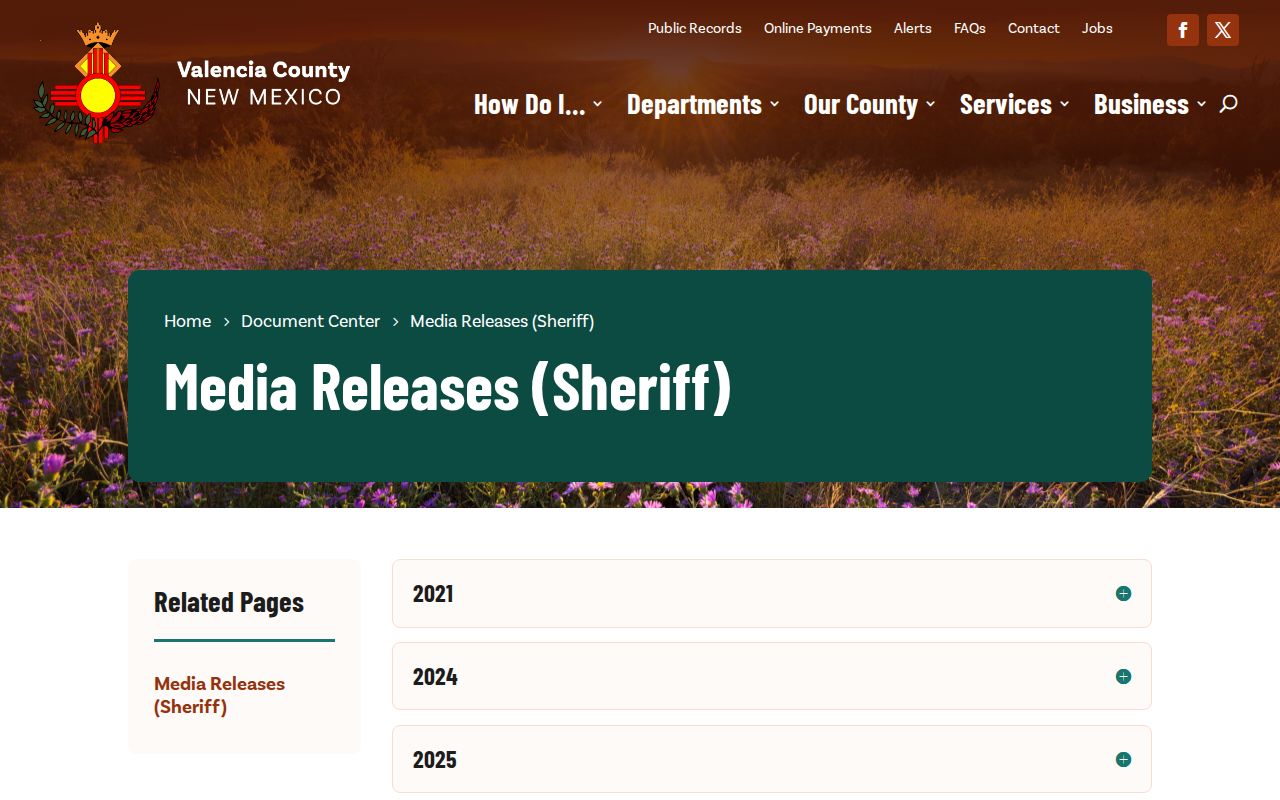
Use it to browse releases, not to count bookings.
Read a Valencia County Blotter
Work backward from whichever source created the item. Search by dates and agency first. Then figure out whether it is a sheriff release, a detention record, a municipal report, dispatch material, a court filing, or a news account. Each custodian serves a different purpose.
- Review dated sheriff releases for selected incidents and open the attached source document, not merely its headline.
- Check the Valencia County jail roster only when present custody matters; it is not a historical log.
- Search the News-Bulletin's sheriff tag for event coverage, then confirm names, dates, and charges with the cited agency or court.
- Request a chronological date range through Valencia County NextRequest when a complete sheriff or detention series is needed.
- Use New Mexico Case Lookup for the filed case and eventual disposition after the booking stage.
Name the start and end dates, the likely arresting agency, and the fields you want. For CAD or dispatch audio, use the separate VRECC IPRA route. City police reports stay with their municipal custodians. A detention record and a Belen, Los Lunas, or Rio Communities police report may describe different parts of one event.
Just checking who is in custody now? The 24 Hour Arrests workflow is built for that. It starts with the current roster and records line. A multi-day search needs more. Never force a custody tool to double as an archive.
Valencia Arrest-Log Entry Fields
The release archive has no fixed booking schema. Content varies by document. Record what each item actually holds. Never infer a bond, booking number, photo, or outcome just because another release showed one; some fields belong in a formal request instead.
| Item | Where to verify it |
|---|---|
| Date and headline | The dated sheriff archive entry and attached release. |
| Incident narrative | The attached release, complaint, or arresting-agency report. |
| Arresting agency | The source document and related report, not a location guess. |
| Charges alleged | The release, booking file, complaint, or court docket; wording may change. |
| Booking date and number | Detention records or the visible roster result, when exposed. |
| Bond | Current detainee information, detention records, or the court. |
| Booking photo | Not promised in the archive; request it expressly if releasable. |
| Final disposition | New Mexico Case Lookup or the court file, not an arrest release. |
A booking record documents jail intake. A police blotter is a chronological law-enforcement record. A media release highlights one selected event. A disposition is the court's later resolution. Keeping the terms straight helps a multi-day search stay accurate.
Note: The county calls current charges and bond public, but does not promise those fields in every sheriff document.
Valencia Arrest News Patterns
Local news can round out what the jail roster leaves out. The Valencia County News-Bulletin sheriff tag carries the deepest coverage in the area. Expect arrest stories alongside warrants, chases, and multi-agency operations. KOAT, KOB, and the Albuquerque Journal pick up major cases too. Papers publish on news value and their own schedules, not on a jail-booking timetable.
A single story may come from an agency release, a court filing, an interview, or video. Photos differ from article to article. No local outlet posts a complete same-day gallery of booking photos. Treat a report as a lead: note the date, the incident, and any source document it cites. Then confirm with the agency record and the court case. A missing story never means a missing arrest; many people are booked in Valencia County without a single line of print.
For extra context after official sources, the News-Bulletin's sheriff archive shows how event-driven reporting works.
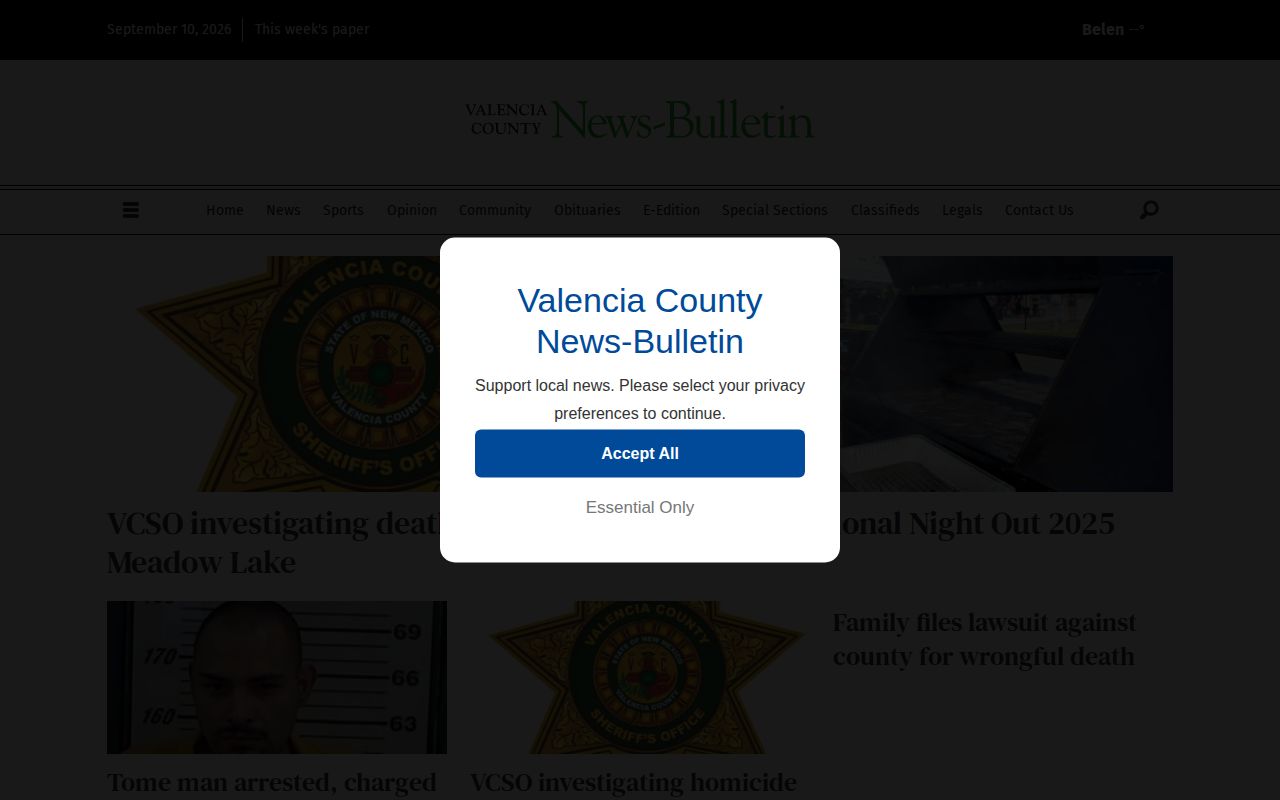
Think of this section as a reporting layer. It is not a county roster or an official blotter. Unofficial booking publishers sit even farther from the source. Their Valencia County arrest coverage varies widely in freshness. RecentlyBooked tends to run closer to current bookings. Busted Newspaper leans on 2022-era entries spread across page after page. Mugshots.com samples run just as stale. A lag, a missing record, or an entry left up after someone's release are all routine hazards on those sites. Treat official Valencia County sources as the tiebreaker. They settle who is actually in custody.
Selected Valencia Enforcement Releases
The sheriff's press archive holds a 2021 checkpoint release. That document covers one enforcement event. It is not a recurring checkpoint log. It is not a daily arrest feed either. Still, it shows what an archive can do: a single release may survive long after the matching roster entry has vanished from public view. The archive simply cannot reconstruct every Valencia County booking from that period.
The 2025 year-end report tells a different story with numbers. It counts 1,187 arrests, 15,936 calls for service, 5,526 reports, and 7,627 traffic stops for the year. Eight registration-violation warrants were issued. All eight subjects were located and arrested. Those totals give real scale to Valencia County enforcement activity. What they cannot do is answer a name-by-name question about who was booked in a given week. An annual summary is not a chronological arrest log.
Treat the statistics as broad context only. For entries tied to a precise period, request the chronological record and any related reports. Ask the custodian to name the responsive record series and to explain any withholding or redaction that applies to it.
Older Valencia Arrest Records
A roster entry that disappears does not mean the booking file was destroyed. Start with the Valencia County Sheriff's Office or the detention Records Manager. The portal Valencia County NextRequest lets you identify the person and the date range. It also names the arresting agency. Then press for a direct answer. Is the file active, stored offline, transferred, or held by another custodian? Was it destroyed under an approved schedule? Each answer points to a next step.
For older schedules, the State Records Center and Archives posts an old schedules reference. Its repealed sheriff schedule describes criminal-history files. Such files could contain arrest and release dates, mug shots, fingerprints, investigation facts, and final disposition. It also lists retention periods. Treat that language as context for your request. Do not read it as a promise the county still honors. Ask the local custodian a direct question. Which current functional schedule and record series governs the file you want?
The state archive reference page shows why old schedule wording works better as background. It is not a guarantee.
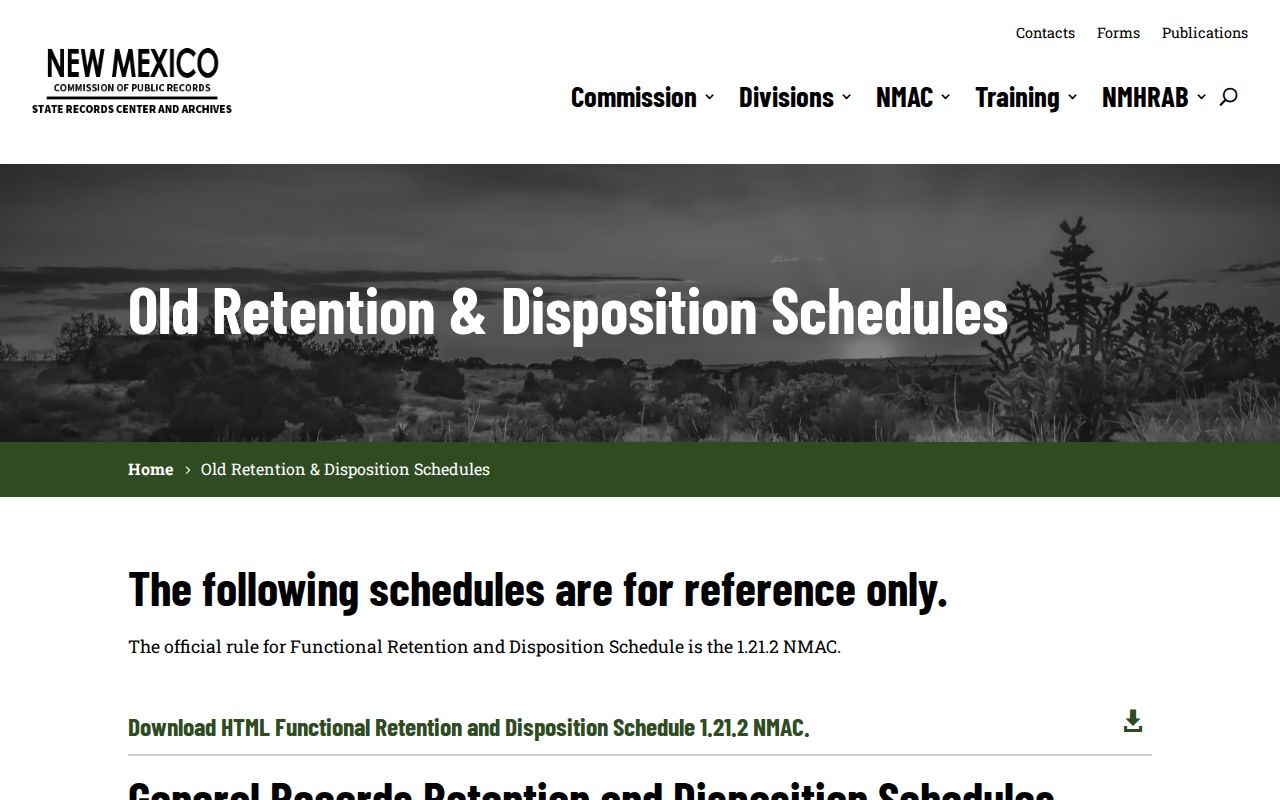
The archival route is one path. It carries a real caution, because transferred Valencia County booking files were not verified there. So keep other doors open.
A booking record may have become a court filing. In that case, search the 13th Judicial District or request the court copy. If a municipal officer wrote the arrest report, contact that city directly. Ask the State Archives only as a second-level inquiry about a named transferred series. A third-party image, meanwhile, proves nothing. It does not show what the county still retains or publishes.
Valencia Arrests Versus Dispositions
Every arrest log entry sits at the start of a longer process. The arresting agency records its action. The jail may create a booking file. The court then takes the case from there. Charges listed at booking can be amended, reduced, dismissed, or resolved some other way.
To follow a filed case, use New Mexico Case Lookup. The court record is the source for disposition, not a sheriff release and not a news story. Early searches can fail before a case is entered. Match by reliable identifiers and dates. Verify any uncertainty with the clerk rather than merging similar names.
Official documents come first. Local journalism can add event context around a Valencia County arrest. Unofficial indexes may offer leads worth checking. Neither one replaces the agency record or the final court file, and that source order is the safest way to read a Valencia County arrest log across several days.
Public Record Search
Sponsored Results